.svg)

Insight > Fiduciary Eye September 2026
The Fiduciary Eye | Summer auction highlights
Welcome to the late-summer edition of The Fiduciary Eye, a seasonal newsletter from Withers Art and Advisory giving you a unique perspective on the global fine-art market.
Banner image: Tyrannosaurus rex ('Gus'), Late Cretaceous | Sotheby's | Natural History including Gus rex
IN THIS ISSUE: WELCOME | KEY FIDUCIARY ISSUES | sUMMER AUCTION HIGHLIGHTS | LEWIS TAKES LONDON | LONDON SALE SUMMARY | OLD MASTERS GAIN STRENGTH | THE SEASON AHEAD
Welcome to the late-summer edition of The Fiduciary Eye, a seasonal newsletter from Withers Art and Advisory giving you a unique perspective on the global fine-art market.
In writing The Fiduciary Eye, Mari-Claudia Jiménez and Frank Lord call upon their insider perspectives within the art world and decades-long experience in law and business to surface critical commercial and legal issues of interest to collectors and their fiduciaries.
In our last issue, we reviewed the strong results from the May marquee auctions in New York. With $2.5 billion in sales across all three houses, it was the biggest season since the last market peak in November 2022. The momentum carried through to the London round of auctions in June, where the Lewis Collection, chock full of masterpieces of Modern and Post-war art, sold for a record-setting £306.5 million ($406.2 million) at Sotheby’s. We have more detail on the London Sales below, but first we consider the growing strength of collectibles that are achieving prices on par with some of the highest-value fine art.
Key fiduciary issues (or, what keeps us up at night): How to value dinosaurs and other collectibles
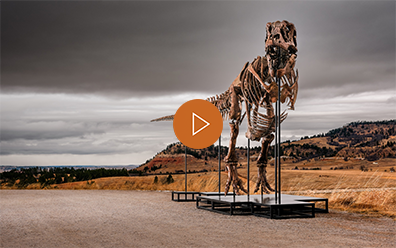
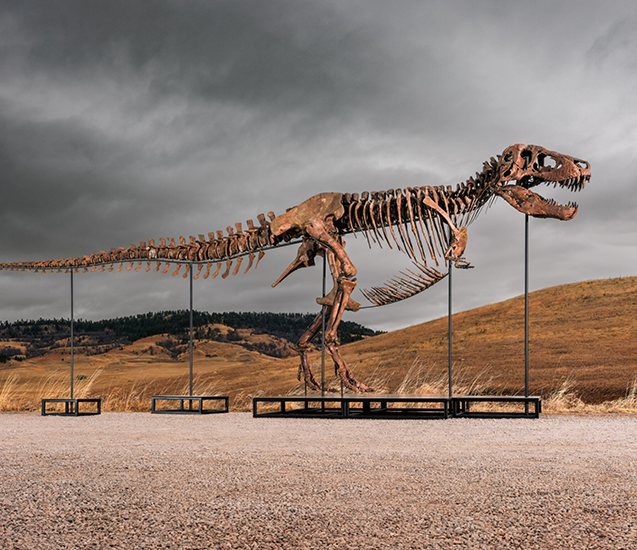
July is generally a quiet month in the auction calendar, but this year Sotheby’s captured global attention by offering 'Gus', a 67-million-year-old Tyrannosaurus rex in its Natural History auction in New York. Needless to say, it was the first time a dinosaur was exhibited at the Breuer Building – the Modernist landmark built to house the Whitney Museum and now serving as Sotheby’s global headquarters – which made the exhibition of the 12 ½-foot-tall, 38-foot-long fossilized skeleton especially dramatic. Estimated at $20-30 million, Gus went for an incredible $50.1 million.
A T. rex is not a traditional sculpture, even when it is shown in a gallery, and yet it commanded a price that one would expect from a top-tier modern or contemporary artwork at an evening sale. Auction house specialists value artworks based on a combination of factors, like rarity, quality, art-historical importance, and provenance. Generally, the most valuable art has extensive documentation behind it, like exhibition and publication history, which collectors additionally use to gauge value. But what are the considerations that go into determining the value of a prehistoric fossil that lay hidden in the ground since the late Cretaceous period?
Provenance is important for an artwork, but it is the critical factor that affects a dinosaur fossil's marketability and value. When collectors, museums, and auction houses evaluate a dinosaur specimen, one of the first questions they ask is where it was found. The find site determines not only the fossil's scientific context, but also whether it can be imported, exported, sold, or even legally owned. A spectacular specimen with uncertain provenance or a risk of claims from foreign governments can be effectively unsaleable while a lesser fossil with clear title may command a considerable price.
Fossil ownership laws vary dramatically across jurisdictions, so for the market, a specimen's provenance can be more important than its scientific significance. In the United States, fossils recovered from federal land are generally considered public resources held in trust by the federal government and may not be legally sold. Under the Paleontological Resources Preservation Act of 2009 (PRPA), scientifically significant fossils may only be collected pursuant to a scientific permit and must be deposited in an approved repository, such as a museum or university research collection, where they remain accessible to scientists and the public. Similar protections apply on many state-owned lands, and fossil collecting on Native American lands is governed by tribal authorities. As a result, fossils discovered on federal or otherwise protected lands are not typically legally available to private buyers, regardless of their scientific or commercial appeal.
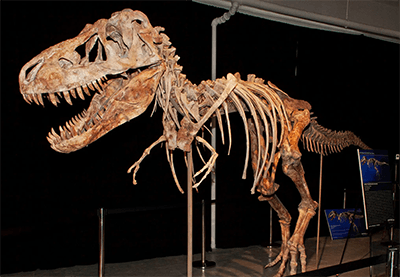
In the US, different laws apply on privately owned property. Fossils found there generally belong to the landowner and may be lawfully sold – creating the legal foundation for a robust commercial fossil market. Other countries take a different approach. Many – including Mongolia, Morocco, and Brazil – treat dinosaur fossils much the way they treat antiquities. They are part of the national patrimony, irrespective of whether they are found on public or private land. They cannot be privately owned and may not be legally exported or traded. And the force of these laws does not stop at a country's border. In the case of Mongolia, the actor Nicholas Cage discovered this the hard way. In 2007, he acquired the skull of a Tyrannosaurus bataar from a Beverly Hills gallery for $276,000. In 2014 the Department of Homeland Security tracked down the dinosaur and informed Cage that the fossil has been stolen. There was little question it had been: that species has been found only in Mongolia. Cage surrendered his dinosaur skull and was not accused of any wrongdoing.
Because those countries laws vest ownership in the State, US law treats fossils taken from those countries as stolen property. The Department of Homeland Security has forced collectors to surrender fossils covered by these laws, and at least one person has been imprisoned for dealing in them. Therefore, given the legal pitfalls, the next time you want to pick up some dinosaur fossils while on vacation in Marrakech . . . you may want to call us first!
US law permits a licit market, making the US the most important source for large, complete dinosaur skeletons. 'Gus,' the Tyrannosaurus rex skeleton that Sotheby's sold in July, is an excellent example. Gus is among the most complete T. rex specimens ever discovered – it has 75% to 80% of the animal's total skeletal mass. This combined with its anatomical rarities (including almost complete dinosaur feet, and healed battle scars and bites from other dinosaurs) and its impeccable find site on private land, made Gus the ultimate 'trophy dinosaur.' The auction house was involved with the dig from the outset, photographing every step, and presented the story in a carefully produced 11-minute documentary video filmed at the dig site. The impeccable provenance combined with the rarity of the dinosaur itself, propelled the record setting price.
Fossils are a special category of object, but the question of how to assess value is of increasing relevance as any number of non-traditional collectibles are appearing alongside art at the major auction houses. Music and sports memorabilia are also surging in value, with prices often turning on 'proof' that a particular object was part of popular history. In March, David Gilmour’s 'Black Strat' became the world’s most expensive guitar when it sold at Christie’s for $14.6 million; the auction house was able to document that the instrument was used in every Pink Floyd album, and so its very sound was embedded in the consciousness of millions of fans. For sports memorabilia, value hinges on definitively connecting a particular item to a great player and a notable game. Over the summer, Sotheby’s offered a basketball warm-up jacket that had been worn by Wilt Chamberlain in the 1972 NBA finals in its Summer Sports Marquee auction. The jacket was discovered at Goodwill by a 19-year-old 'treasure hunter' for $3.07! The auction house proved its historical place through rigorous photo-matching to 54-year-old images from the NBA finals. It ultimately went for $89,600 – nothing close to the $10.1 million Sotheby’s got in 2022 for Michael Jordan’s 'Last Dance' game-worn jersey from the 1998 NBA finals, but not bad for a $3 thrift-store find.

Summer auction highlights
Amedeo Modigliani | Nu assis au collier (detail), 1917-18
Sold for £48.2 million
Sotheby's
Masterpieces from the Lewis Collection
Courtesy Sotheby's

Summer auction highlights
Claude Monet | Nymphéas (detail), 1907
Sold for £40.8 million
Sotheby's
Modern and Contemporary Evening Auction
Courtesy Sotheby's

Summer auction highlights
Lucian Freud | Sleeping by the Lion Carpet (detail), 1995-96
Sold for £29.3 million
Sotheby's
Masterpieces from the Lewis Collection
Courtesy Sotheby's
Summer auction highlights
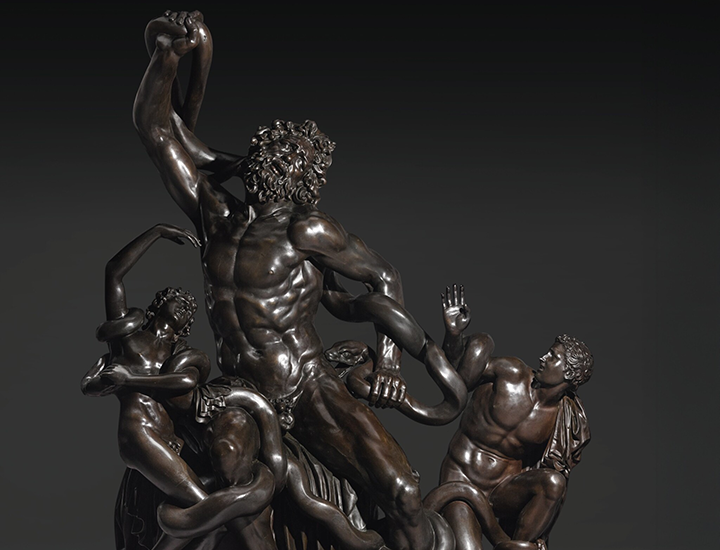
Auguste-Jean-Marie Carbonneaux | The Hamilton Laocoön (detail), 1817
Sold for £13.6 million
Sotheby's
The Hamilton Laocoön
Courtesy Sotheby's

Summer auction highlights
Sir Thomas Lawrence | Portrait of Arthur Wellesley, 1st Duke of Wellington (detail), 1821
Sold for £9.7 million
Christie's
Old Masters Evening Sale
Courtesy Christie's
Summer auction highlights
Tyrannosaurus rex ('Gus'), Late Cretaceous
Sold for $50.1 million
Sotheby's
Natural History including Gus rex
Courtesy Sotheby's
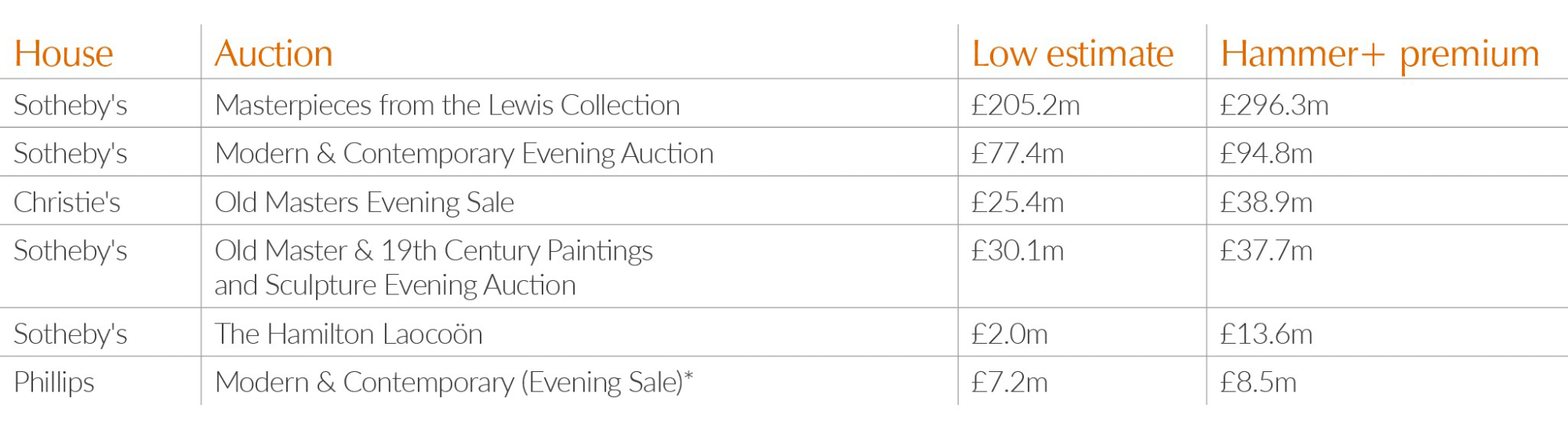
Summary of evening sale results
Lewis takes London

Sotheby's auction of major 19th- and 20th-century paintings and sculpture from the collection of British financier Joe Lewis and his daughter Vivienne totaled £306.6 million ($406.2 million). Nine lots sold for more than £10 million, led by an Amedeo Modigliani nude that went for £48 million ($63.9 million). The sale was fascinating from a fiduciary perspective for two main reasons. First, collections of this value have traditionally come to market following the passing of the collector, but the 89-year-old Lewis, who became a billionaire through currency trading, is very much alive, as is his daughter. Increasingly, collectors are choosing to sell during their lifetimes, simplifying the division of an estate, creating liquidity for the next generation, and, importantly, retaining control over how a collection they spent decades building is presented to the public. Art-rich estates often face significant financial challenges, including enormous liquidity needs and compressed tax deadlines. That can force decisions about valuable works on a timetable that is far shorter than one would ideally want for planning, positioning, and selling a major collection. This is why we believe conversations about succession need to begin well before there is an estate to administer. For important collections, the question isn’t simply who inherits the art but what the family ultimately wants the collection to accomplish — financially, culturally, and as part of the collector’s legacy.
Second, collections of great magnitude are almost exclusively sold in New York, but it turns out that the decision to sell in London directly after the tremendously successful May sales was the right one. As the undisputed highlight of the June sales of Impressionist, Modern and Contemporary art, the Lewis Collection didn’t have to share the spotlight with any competing collections, giving it much more press coverage leading up to the sale than it might otherwise have garnered. And, since Lewis is so well known in Britain (he is the former owner of the Tottenham Hotspur Football Club), his story carried more resonance in London than it would have in New York. Seeing the success of the sale must have been very gratifying for the Lewises. When collectors sell rather than leaving it to their estates, it’s kind of like attending your own funeral — watching the market validate your choices, celebrate what you built, hearing all the lovely things people have to say about your eye and your collection, and actually being there to enjoy it! We haven’t yet seen the full extent of the collection: another tranche of Lewis-owned paintings, all by Léonard Tsuguharu Foujita, will be offered at Sotheby’s Hong Kong this October.
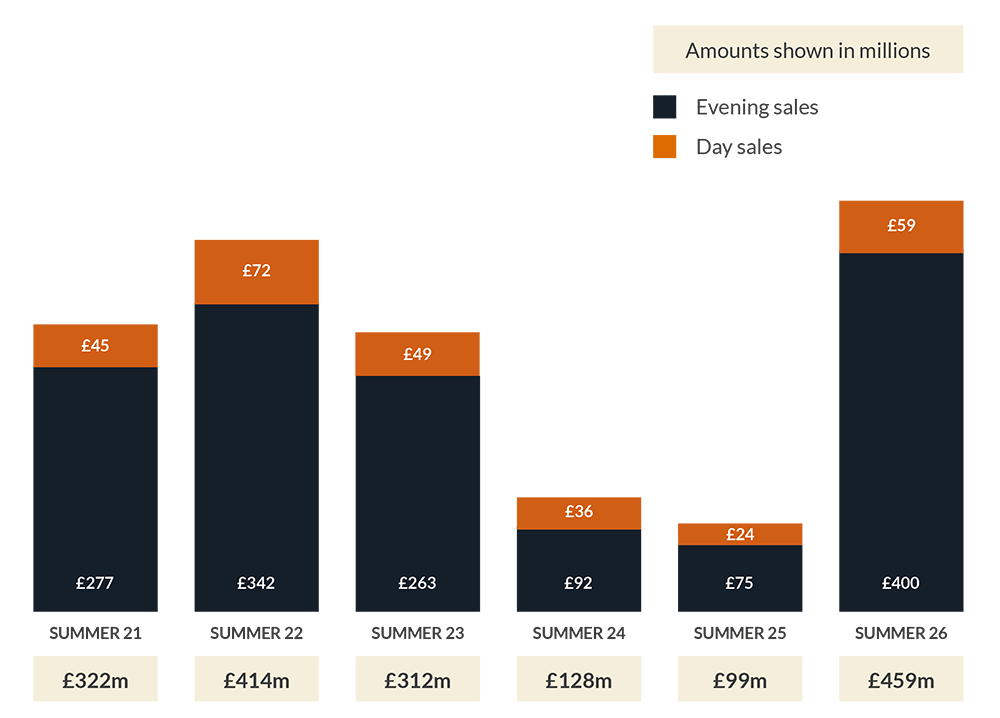
London summer auctions: Impressionist, Modern and Contemporary (Consolidated sales: Christie’s, Phillips, Sotheby’s)
Old masters gain strength
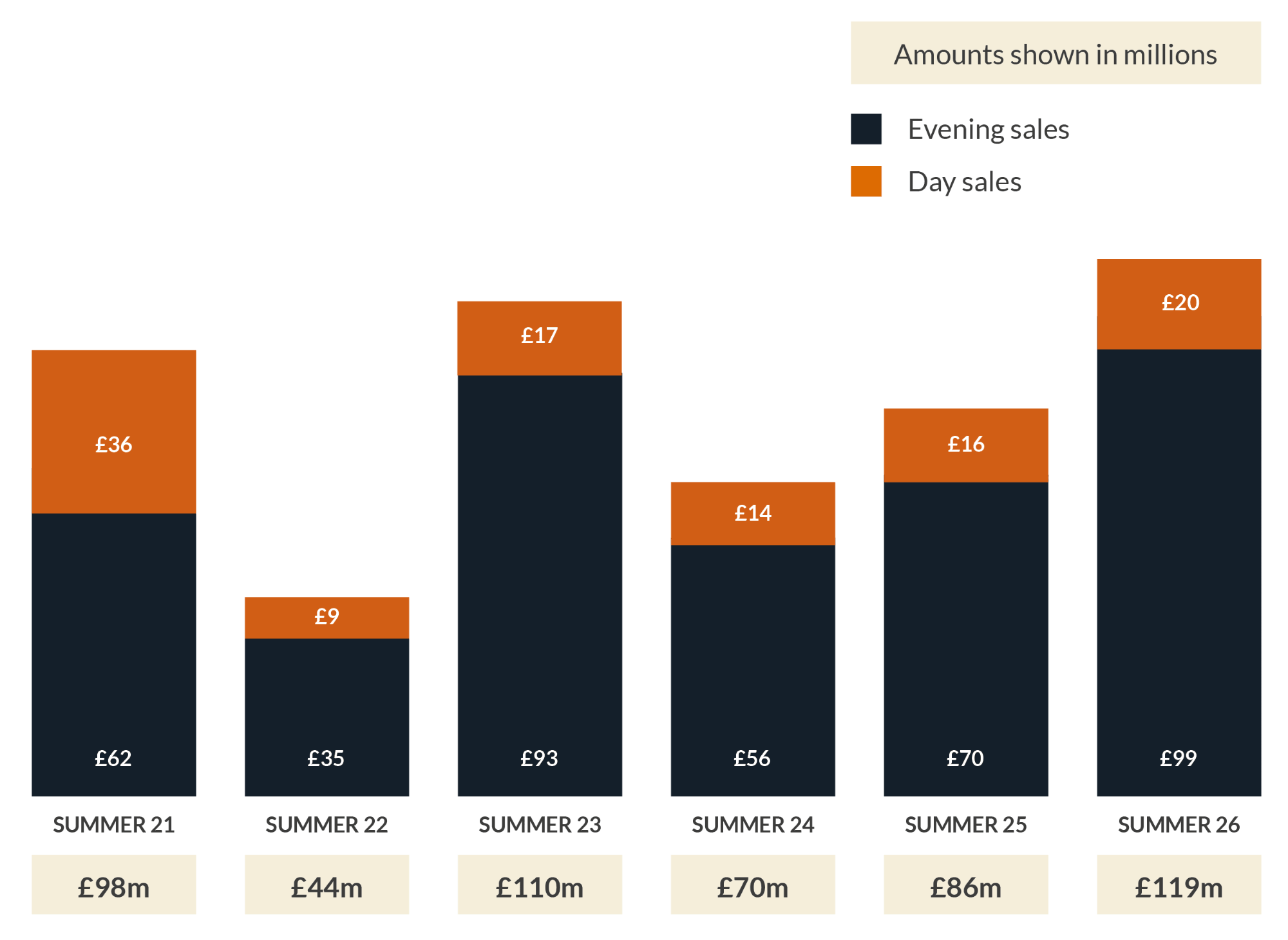
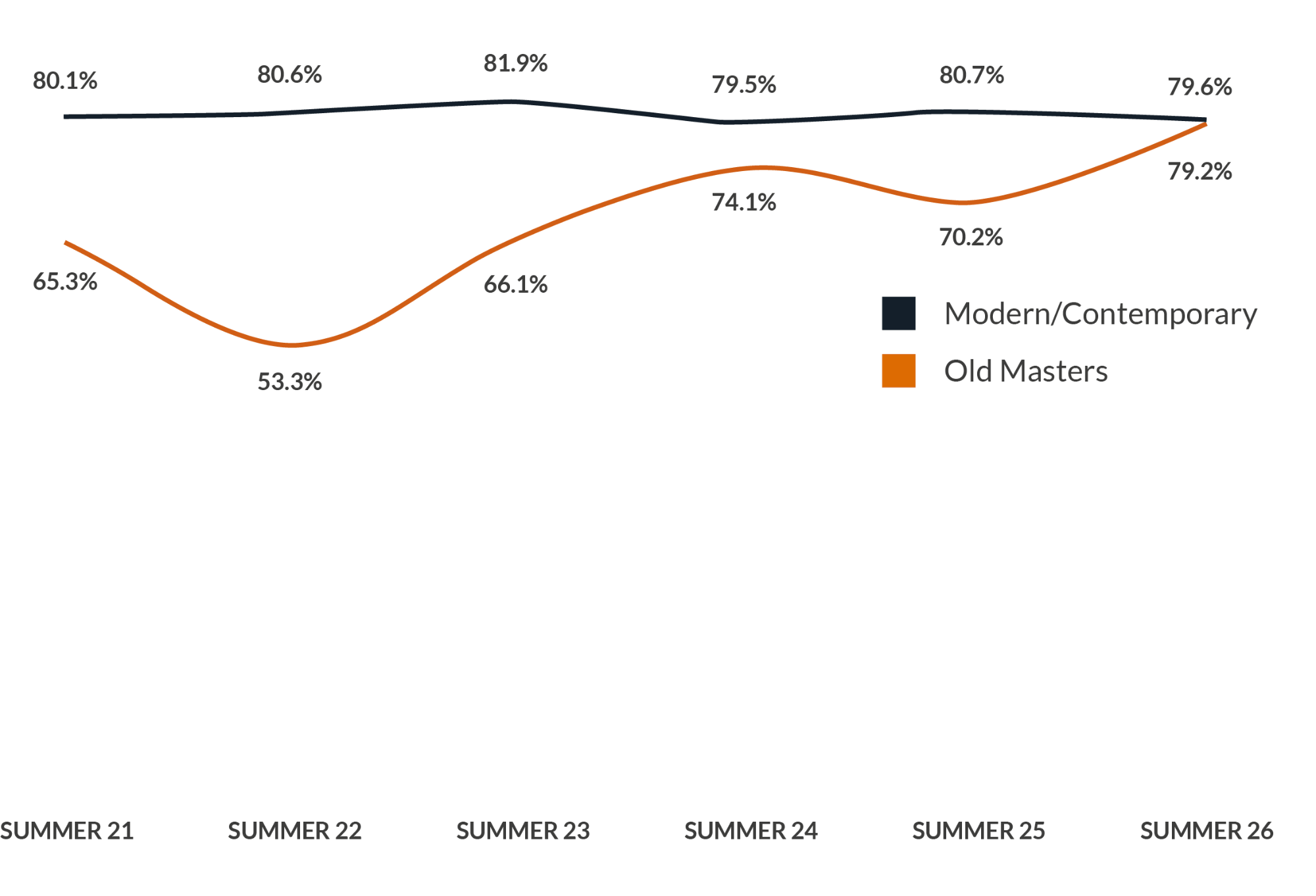
The Lewis Collection propelled London’s June sales of Impressionist, Modern and Contemporary art to their highest totals in six years. Later that month, Old Masters followed suit, with strong sales at both Christie’s and Sotheby’s. The Old Masters market is generally masterpiece driven, with results dependent on having examples of big names like Rembrandt or Canaletto, but this season the top lots at both houses were by lesser-known artists. At Christie’s, Sir Thomas Lawrence’s 1821 portrait of the Duke of Wellington brought £9.7 million ($12.8 million) and at Sotheby’s, Auguste-Jean-Marie Carbonneaux’s 1821 version of the famed classical sculpture the Laocoön Group fetched £13.6 million ($18.4 million). We have long argued Old Masters are undervalued. In a market where Modern and Contemporary art regularly commands prices well in excess of $50 million, exceptional Old Master paintings, drawings, and sculpture, which can be acquired for much less (despite their scarcity), are increasingly being viewed through a different lens. They represent an opportunity to acquire works that have not only shaped art history, but have also survived centuries of changing tastes, scholarship, and collecting trends. That combination of historical significance, rarity, and relative value is resonating with a new generation of collectors. Perhaps that explains why the Old Masters sell-through rate (the percentage of lots offered in an auction that find buyers) has risen over the past six years in London to match that of the Modern & Contemporary categories.

.png)
The season ahead
Sotheby’s and Christie’s haven’t yet announced any of the major collections they will offer in New York this November, although unconfirmed press reports have come out about two that are expected to come to auction – filled with top-notch masterpieces of Post-Impressionism through Contemporary art. This is a time when speculation about the season ahead runs rampant. In mid-August, Mari-Claudia was featured in Marion Maneker’s much read column for Puck centering on what he cheekily called 'the dark art of property gathering.' Based on her years of experience on both sides of the negotiating table, Mari-Claudia was able to provide an insider’s perspective on the ideal times to consign a collection. Her advice: 'You either want to go really early in the process,' when the prime marketing placements and a spot in international tours are still available, 'or really late,' when the auction houses become more desperate for top property and are likely to offer the best financial terms, including larger guarantees. The gathering season technically extends through early October, so collectors – and their fiduciaries – have a lot to think about right now!
How we can help
Authors

Mari-Claudia Jiménez
Partner | Co-head of art law | Withers Art and Advisory | New York
Mari-Claudia Jiménez
Partner | Co-head of art law | Withers Art and Advisory | New York
Withers Art and Advisory
View Profile
Frank K. Lord IV
Senior Counsel | Withers Art and Advisory | New York
Subscribe to The Fiduciary Eye
Our seasonal newsletter will be published on our website throughout the year. Subscribe to ensure you receive a copy direct to your inbox.