.svg)
Article
Southeast Asia: Navigating growth capital in a changing market
27 August 2026 | 5 minute read
As investors become more selective, founders must demonstrate stronger fundamentals, better governance and greater flexibility in how they fund growth.
Southeast Asia remains an attractive market, supported by expanding consumer demand, a growing digital economy and its increasing role in global supply chains. However, the discussion highlighted a shift in what investors expect from businesses seeking capital, with greater emphasis now placed on financial resilience, disciplined growth and credible routes to liquidity.
These themes were recently explored at a breakfast roundtable in Singapore hosted by Withers KhattarWong in collaboration with CAIA Singapore. The Chartered Alternative Investment Analyst (CAIA) Association is a global network of investment professionals redefining the future of capital allocation as traditional and alternative converge. CAIA leads with authority, inspires through education, and connects people who turn insight into action. The purpose is to build the most energised community of investment professionals worldwide, devoted to improving investment outcome. As Daniel Yong, Joint Managing Partner and Head of the Singapore Funds Practice at Withers KhattarWong, observed, "The long-term growth story remains intact, but capital has become more selective, due diligence deeper and investors are asking harder questions around where to invest."
From growth stories to financial discipline
During periods of abundant liquidity, companies could often raise capital largely on market opportunity and growth projections. Today, that story must be supported by credible numbers. Investors increasingly want to understand revenue, cash flow, margins, unit economics, capital requirements and the path towards profitability.
Justin Patrick, Director at Altirra Ventures Ltd., described this as a shift "from narrative to numbers". He explained, "Investors are examining whether financial statements and forecasts genuinely support the growth story."
Sustainable expansion and disciplined capital allocation are therefore being prioritised over growth pursued without sufficient regard to cost.
Darren Chua, CAIA Singapore Chapter Executive and Chief Investment Officer at PT Asian Bulk Logistics and Founding Partner of Vynn Capital, noted, "The market has changed, but the fundamentals of investment have not. We still need to ask what the defensible cash flow is and whether the business is viable on a realistic basis."
Founders should also revisit valuation expectations. Benchmarks reached during unusually liquid markets may no longer be realistic and holding too firmly to them can delay fundraising or complicate later rounds.
Due diligence and governance
Investors are looking beyond financial models to people, systems and governance structures behind it. They are paying closer attention to reporting, the finance function, board effectiveness and whether founders remain transparent after the investment closes.
Jonathan Barki, Managing Director at Star Capital and Chief Investment Officer at SUN Energy, explained, "Investors are recognising the limits of what can be verified before a transaction and are thinking more carefully about their relationship with founders after capital is deployed."
Founder and investor alignment is therefore increasingly important. Expectations around future fundraising, remuneration, investor involvement, strategic changes and possible exits should be discussed before an investment is consummated.
These expectations should be supported by:
- clear information rights and regular reporting;
- appropriate board oversight;
- controls over material decisions; and
- effective financial and audit processes.
Strong governance is not merely defensive. Companies with reliable information channels and credible controls are generally better placed to attract follow-on investments and a successful exit.
A broader funding toolkit
A conventional venture capital round is no longer the only option for companies seeking to extend their runway or finance expansion. Alternatives now include insider or bridge rounds, strategic corporate investment, venture debt, private credit, working capital facilities and secondary transactions.
Each option carries different consequences. Debt may reduce equity dilution but will introduce repayment obligations. Strategic investors may bring customers, technology or market access but often will seek rights affecting future transactions. Financing should therefore support a company’s longer-term plans, rather than simply resolve an immediate liquidity issue.
Daniel noted that capital constraints are also evident, saying, "The slowdown in fund formation has made the pressure on capital increasingly visible. Emerging managers have been particularly affected but even established managers are encountering greater challenges even in re-ups."
Singapore's role and the exit question
Singapore remains well placed to serve as a base for accessing Southeast Asian growth. Its legal and regulatory environment, fund management ecosystem and regional connections offer investors a trusted platform from which to deploy capital.
Shane Chesson, Founding Partner of Openspace Capital, and Vice-Chairman of SVCA (Singapore Venture & Private Capital Association) said, "In uncertain conditions, investors are attracted to trust, reliability and institutional quality. Singapore has an important role in helping investors access Southeast Asia’s growth opportunities at an acceptable level of risk."
The next stage is not simply to attract capital to Singapore, but to strengthen the full lifecycle through which it is raised, structured, deployed and returned to investors. Where traditional exits take longer, interest naturally increases in M&A, secondaries, continuation funds and other liquidity solutions.
As Daniel explained, "Secondaries, continuation funds and other alternative exit options have come to the fore because of the liquidity and exit challenges the market has been facing."
The panel broadly agreed that, as companies consider exits through M&A or public listings, the role of the CFO and continued improvements in governance and reporting standards across the region will be central. Together, these can help businesses transition from the startup stage to the growth stage and prepare more effectively for future liquidity events.
These markets depend on confidence in valuations, financial information and eventual exit prospects. Stronger regional public markets would support the wider private capital ecosystem by providing potential exits and credible valuation benchmarks.
Building through a more disciplined cycle
A more constrained capital environment is challenging but it can also produce stronger businesses. Companies that operate efficiently, maintain reliable financial information and build trusted relationships with investors will be better prepared for future growth.
The fundamentals of investment have not disappeared. They have become more visible. If you would like to discuss how these developments may affect your fundraising or investment strategy, our specialist legal teams would be pleased to advise.
Key contacts
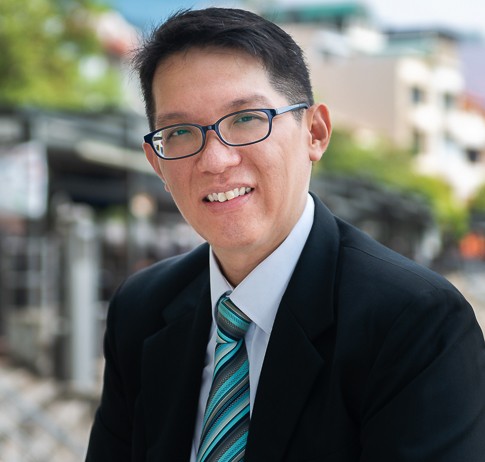
Darren Chua
CAIA Singapore Chapter Executive and Chief Investment Officer at PT Asian Bulk Logistics and Founding Partner of Vynn Capital
View Profile
Shane Chesson
Founding Partner of Openspace Capital, and Vice-Chairman of SVCA (Singapore Venture & Private Capital Association)
View Profile
Jonathan Barki
Managing Director at Star Capital and Chief Investment Officer at SUN Energy
View ProfileRelated experience
As a full-service law firm, we are able to provide advice and information about a wide range of other issues. Here are some related areas.
