.svg)
Article
'It’ll never happen to us': the most common pitfalls of inheritance and succession
22 June 2026
It was Robert Burns who coined the saying that the best-laid plans can go wrong. With experience of helping clients around the world to navigate estate planning, inheritance decisions and disputes, Withers’ lawyers can attest that when there is significant wealth at stake, even the most carefully drafted words become the subject of intense scrutiny.
This can leave relatives not only grieving a loved one but simultaneously in a dispute, struggling to come to terms with the deceased person's legacy. To avoid such a scenario, it is worth considering where things most commonly go wrong.
Avoiding difficult conversations
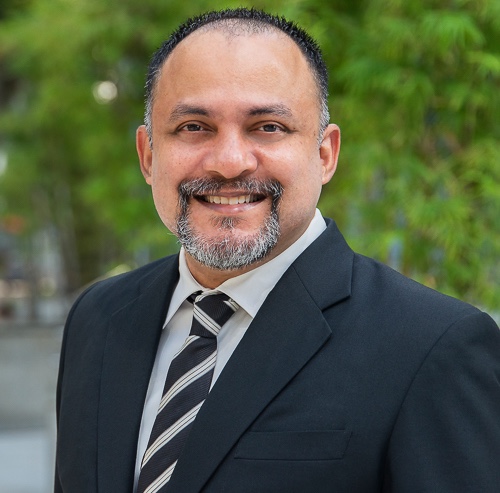
A lack of communication is perhaps the most common theme in succession disputes. Where decisions are made and either not shared or revealed too late. 'Succession planning goes far beyond drafting a will,' says Chenthil Kumarasingam, regional division leader for dispute resolution in Asia. 'It involves understanding family values, expectations, and how roles will be allocated. We used to put no-contest clauses into wills, but the real solution is building consensus beforehand.' These early conversations are often the foundation of effective succession planning, particularly where significant wealth or complex family dynamics are involved.
We used to put no-contest clauses into wills, but the real solution is building consensus beforehand.
Tensions arise quickly where decisions come as a surprise, so the Withers team advise early, structured conversations. Even if uncomfortable, they help manage expectations and prevent misunderstandings from escalating.
Relying too heavily on one individual
Many successful families operate around a central decision-maker, which creates risk if that individual becomes unable to act.
'Patterns of behaviour develop over time,' says Stephen Richards, regional division leader for trust, estates and inheritance disputes in Europe. 'One person holds the information, makes the decisions and others defer to them. When that person is no longer there, things can quickly unravel.'

This can leave others unprepared and, in some cases, in dispute. A strong patriarch or matriarch will share knowledge and responsibility to ensure continuity.
Weak governance in family businesses
Clear long-term family business succession planning is vital, especially where succession is expected to span across generations. 'Family-run companies tend to be quite light on corporate governance,' says Chenthil. 'If the parent who built the company up anoints one child as leader but splits ownership without discussion, that can become a problem.'
Such disputes may impact the business quickly, so it is wise to put more robust governance in place, whether through external management or earlier communication, and to consider alternative provisions for those not receiving shares.
Choosing the wrong trustees or executors
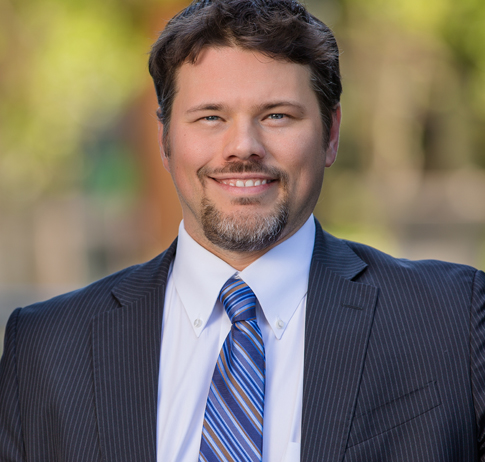
The selection of trustees and executors is one of the most consequential, and often underestimated, decisions in succession planning. 'Clients will often say they trust their children and want them to act together,' says Michael Brophy, who leads Withers’ US private client and tax team from Los Angeles. 'But they don’t always consider how decisions will be made in practice, or what happens if there is disagreement.'
One person holds the information, makes the decisions and others defer to them. When that person is no longer there, things can quickly unravel.
In some cases, appointing an independent professional can help avoid conflict, even if it introduces cost. The key is to think through not only who is appointed, but how they will operate under pressure.
Taking AI’s word for it
A more recent development is clients using AI to navigate legal issues. This can help people understand the landscape, however, it is also unreliable.
'AI can give people a misplaced sense of confidence,' says Stephen Richards. 'It may be largely accurate, but it does not capture the full picture. That’s something we see when opponents are litigants in person who think they have been given clever arguments but are in fact pushing the case deeper into the quagmire.'
Nor should the human element of legal advice be underestimated. 'We don’t just solve the legal problem; we try to make the situation better. Perhaps some ties can be restored, or issues can be disentangled so that the family can work together or the company can succeed.'
Rushing into legal action, or leaving it too late
The Withers team have an outstanding track record of litigating trust and estate disputes. However, legal action should be a last resort, not a knee-jerk reaction. 'I’ve seen cases where parties have launched litigation based on limited information,' says Michael Brophy. 'By that point, they may already have spent significant sums, and positions have hardened.'

That said, it’s also important not to delay too long as, in many jurisdictions, strict time limits apply to challenges involving wills and trusts, adds Michael: 'Whether through grief, inaction or poor advice, some clients simply wait too long. By the time they are ready to act, they may have lost the ability to do so.'
Getting good advice early, taking the time to investigate and, where possible, engaging with the other side can lead to more constructive outcomes.
Failing to plan for loss of capacity
'One of the biggest problems we see is issues around the elderly and their wealth,' says Michael Brophy. 'As people get older, their abilities may change and that can leave them vulnerable to influence.'
The evolving laws aimed at protecting our aging population from fraud and undue influence are often tools in disputes in capacity disputes. 'In jurisdictions like California, capacity is not a binary concept, it exists on a spectrum,' explains Michael. 'That sliding scale makes it possible for different parties to characterise someone’s behaviour in different ways. Experts will offer opinions on either side of the capacity question. I do think the issues of capacity and influence are challenging for families, I’ve seen cases where both sides absolutely believe what they are saying about the elder is true , and it tears the family apart.'
Communication is again key to heading off that risk. Family members need to stay in touch with elders to make sure there are no issues with them handling their affairs and to notice if any undue influence is occurring. While elders with capacity who are materially changing their plans should consider if they should prepare for a challenge. 'The best plan is to discuss the potential impact of changes with the estate planning client and to directly discuss how to protect the elder's intent. ‘I know my kids are going to hate my new wife, but I’m going to take care of her. How do I make my estate plan bullet resistant?'
The answer may be to share their plans early so that they can have a discussion with their family and resolve disputes while they are still around to defend their own plan. It can also be helpful to obtain medical evidence of capacity or introduce independent oversight before changing plans. The important thing is to consider and discuss issues stemming from a client's advanced age or changing abilities as it relates to his or her estate planning intent.
Assuming everything is fine
On the flipside, Stephen Richards sees plenty of cases where an elderly person has been influenced to change their succession plans. 'Isolation can really feed vulnerability,' he says. 'If you are the only person your father ever sees, then a decision he makes might be questionable.'
I’ve seen cases where parties have launched litigation based on limited information. By that point, they may already have spent significant sums, and positions have hardened.
While awareness around coercion is improving, one of the most common pitfalls Stephen sees is families not staying connected. 'So often someone will come to me with concerns about a relative’s plans, but they’re not involved in their lives so they don’t know who might be influencing or controlling them, and that is a real problem.'
Allowing personal dynamics to drive decisions
Succession disputes are rarely just about assets; they are shaped by longstanding relationships, perceived imbalances and unresolved tensions, which can create collateral damage.
'I had a case recently involving a family business where the original founders had divorced and their children took different sides and ended up not speaking,' recalls Chenthil. 'The matter reached a settlement during trial, as a result of the parties coming to terms with the fact that the source of the dispute was an enduring sense of anger and betrayal rather than any specific business issue.'
In the end, many of the most serious issues arise not because families failed to plan, but because they planned in isolation. Where those early conversations do happen, families are far better placed to navigate not just the transfer of wealth, but the relationships that sit behind it.
Key contacts

Related experience
As a full-service law firm, we are able to provide advice and information about a wide range of other issues. Here are some related areas.
