.svg)
Article
Building a lasting family legacy through art: a Singapore perspective
28 January 2026 | Applicable law: England and Wales, Singapore | 4 minute read
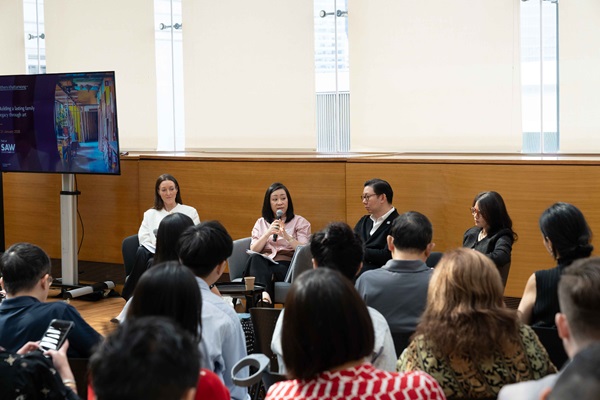
At a recent Withers KhattarWong panel discussion held at the National Gallery Singapore during Singapore Art Week, speakers from the art community, institutional and legal worlds explored a question many families are increasingly asking. How do you build a meaningful legacy through art, without uncertainty, conflict or avoidable risk?
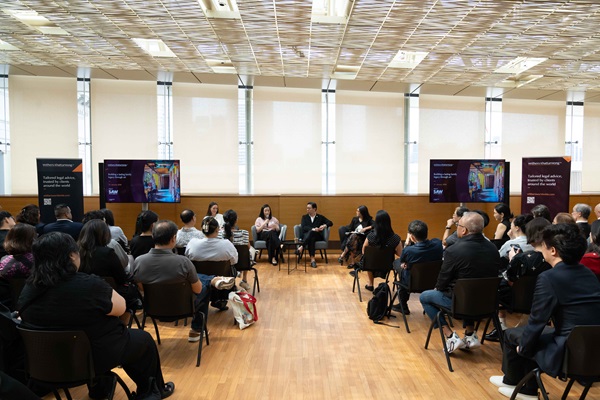
The conversation reflected a sentiment art collectors would instinctively recognise. Art is rarely 'just an asset'. It carries personal history, cultural identity and values. It can also represent significant financial value; and it is this combination which makes it uniquely powerful and potentially sensitive when it comes to long-term planning.
Ning Chong, Managing Director of Family Office for the Art, described legacy building as something that must be designed, not assumed. 'Legacy building is about transforming private collections into meaningful cultural capital,' she said, whether through exhibitions, publications or other ways of sharing and preserving the story behind a collection.
Legacy starts with clarity
Families often begin collecting in a natural, unstructured way. Works are acquired during travel, through relationships, or in response to an emotional connection. Over time, collections can become substantial but not necessarily coherent, well-documented or easy to manage. That is where the first real legacy risk can appear; when the family is unsure about what it owns, where the items are located, what they are worth, and what obligations come with ownership.
Foundational work in understanding the different aspects of art ownership is rarely glamorous, but it is essential. A collection that has been properly catalogued and documented is easier to insure, easier to lend, easier to value and easier to pass on. It also gives families options. They can decide for example, to keep a 'core' set of works together, selectively divest pieces that no longer fit their collecting philosophies, make gifts with confidence, or plan donations in a way that preserves meaning.
This is also the point at which good advice becomes less about personal taste and more about proper stewardship. It involves tracking provenance and title, maintaining condition and restoration records, keeping invoices and certificates, ensuring appropriate storage, and building a process for decision-making around acquisitions, donations and sales. Without these basic structures in place, problems will surface when a family needs to act quickly for example, during a sudden sale, relocation, or succession event
Trust matters in art, but due diligence matters more
One of the strongest themes of the discussion was how trust operates in the art market. Because art transactions are often relationship-driven, families can be tempted to rely on reputational signals and informal assurances. That can work; until it doesn’t.
Sarah Barker, Partner and Global Co-Head of Art Law at Withers, highlighted how conflict risks can arise in ways that may not be immediately obvious. 'The art world would be massively de-risked if everybody had an in-depth understanding of the potential conflicts of interest,' she said, pointing to issues such as undisclosed commissions, intermediaries acting on both sides of a transaction, and pricing dynamics that may not be fully transparent. Managing such potential conflicts is an important aspect of the international art transaction advice Sarah Barker provides to her collector clients.
Her broader point was a practical one; trust but verify. Collectors of high value art would be well advised to apply the same discipline that they afford to any other financially significant transaction. That means verifying ownership and title, checking authenticity and the condition of the artwork, understanding or negotiating the terms of sale, and being especially careful where works are bought through intermediaries or moved across borders.
The stakes here are not theoretical. Innocent good faith purchasers do not always obtain good title; and can find themselves unwittingly drawn into a title dispute. Even sophisticated buyers can find themselves holding works that later become difficult to sell, lend, gift or insure because the paper trails are incomplete or provenance is disputed.
Institutions can help preserve legacy, but plan ahead
The discussion also considered how collectors and institutions can work together in shaping long-term legacy. Museums are often seen as a final destination for art. In reality, they play a broader role in preservation, interpretation and public engagement.
Aun Koh, Assistant Chief Executive of National Gallery Singapore, framed legacy as something that extends beyond ownership. 'For many collectors, legacy is not just about ownership, but about contributing to a broader cultural narrative and ensuring that significant works can be preserved, studied and shared with future generations,' he said.
He also emphasised that museums today operate as more than repositories of objects. 'They are platforms for education, community engagement and cultural exchange, which is why thoughtful patronage remains so important,' he noted.
For families considering how their collections might one day intersect with public institutions, the key takeaway was the value of intention and timing. Engaging early allows collectors to think carefully about how their values, their collections and public benefit can align, rather than treating donation or lending as a last-minute decision.
Succession is where art collections are most vulnerable
If art is considered highly personal during a lifetime, it can become deeply complicated after death. That is because art collections sit at the intersection of value, sentiment and diverse preferences. Some beneficiaries may love the art. Others may want liquidity. Some may wish to preserve a coherent family collection while others may prefer to sell pieces that do not resonate with them.
Usha Chandradas, Consultant at Withers KhattarWong, returned repeatedly to the point that succession issues are rarely about law alone. They are about how families communicate, and whether they treat art as part of long-term estate planning. She observed that when families begin planning early and clarify individual roles together, collections can become a source of unity rather than tension. 'If you’re very clear up front about who is interested in art, and who is interested in other parts of the estate… it can bring the family together,' she said.
She also highlighted how quickly practical realities can reshape even well-meaning intentions. 'What’s the meaning of the painting?' she asked, pointing out that some families treat art as a private asset that ends up unseen in storage, while others strategically plan for works to be exhibited, rotated, or shared; including negotiating for pieces to be displayed in specific contexts where they carry the greatest cultural and personal significance.
Her broader message was that families should not leave these decisions too late. If the first serious discussion happens only when wealth has to be divided on a time sensitive basis, the risk is that outcomes can become transactional and emotionally bruising. Early conversations, documented decisions, and clear expectations, reduce the pressure on the next generation; and greatly minimise the likelihood of conflict. Sarah Barker stressed the importance of establishing clear decision-making processes and good corporate governance structures where collections are intended to be managed in a coherent fashion for generations to come.
A modern legacy requires structure, but not stiffness
The underlying message from the panel was reassuring. Families do not need to choose between loving art and managing it responsibly. They can do both. The best outcomes usually come from treating art collecting as a long-term stewardship project supported by sound documentation, clear governance and thoughtful planning.
The welcome result is not just protection of financial value but the preservation of meaning for the family and for the art collection. When done well, art becomes a significant vehicle for passing on culture, memory and identity, not a source of confusion or conflict.
To read more about the legal, succession and cross-border considerations facing art collectors, see International estate planning for art collectors – a Singapore perspective.
If you would like advice on building, managing, protecting or transitioning a family art collection, our legal experts would be pleased to assist.
Singapore: where successful businesses and families thrive
Get in touch

Aun Koh
Assistant Chief Executive | National Gallery Singapore

Ning Chong
Managing Director | Family Office For Art
Related experience
As a full-service law firm, we are able to provide advice and information about a wide range of other issues. Here are some related areas.
