.svg)
Article
Singapore: A Leading Hub for International Arbitration (International Arbitration Laws and Regulations 2025)
9 July 2025
Singapore has firmly established itself as a global leader in international arbitration, anchored by a modern legal framework and strong institutional support. According to the 2025 International Arbitration Survey released by Queen Mary University of London1, it ranks among the top two most preferred arbitration seats globally.
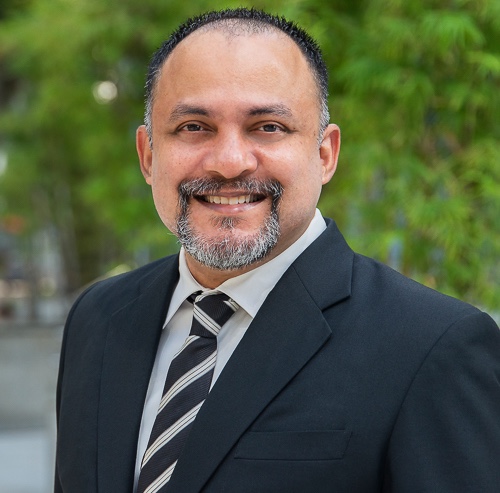
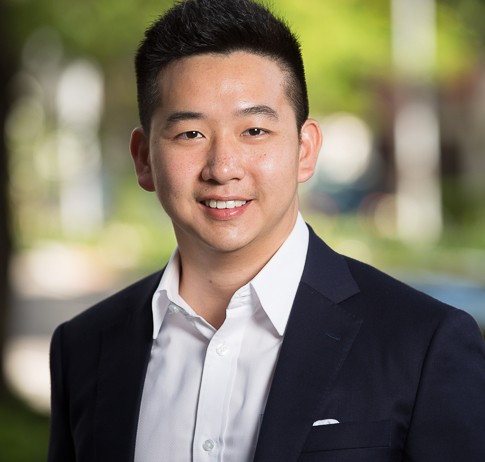
In Global Legal Insight's International Arbitration Laws and Regulations 2025, Chenthil Kumarasingam, Jonathan Tan and Maria Santhosh examine the key features and developments shaping Singapore’s arbitration landscape.
A robust statutory framework
Singapore’s arbitration regime is built on two statutes:
- International Arbitration Act 1994 (IAA) — governing international arbitrations, adopting the UNCITRAL Model Law, and emphasizing minimal court intervention.
- Arbitration Act 2001 (AA) — covering domestic arbitrations, allowing greater scope for court oversight, including appeals on questions of law.
Courts play a supportive role, reinforcing finality and party autonomy.
Party autonomy and flexible agreements
Singapore courts take an expansive and pro-arbitration approach to interpreting arbitration agreements to respect parties’ intentions.
Key features include:
- Broad definitions of arbitration agreements, including electronic communications.
- Upholding clauses offering arbitration as an option alongside litigation.
- Recognizing references to external documents incorporating arbitration clauses.
Institutional and procedural versatility
Parties have a choice of:
- Institutional arbitration, with SIAC as a leading option.
- Ad hoc arbitration, offering maximum procedural flexibility.
- Statutory arbitration, in specified regulated contexts.
Procedurally, parties can choose between:
- The “pleadings” style common in common law jurisdictions.
- The “memorial” style, presenting comprehensive evidence and arguments upfront.
- Hybrid approaches adopting elements from both the 'pleadings' style and the 'memorial' style.
Modern funding and interim measures
Singapore permits third-party funding in both international and domestic arbitration. Under recent amendments:
- Disclosure of funding arrangements is required under the SIAC Rules.
- Tribunals can account for funding when apportioning costs.
Singapore has firmly established itself as a global leader in international arbitration, anchored by a modern legal framework and strong institutional support
Tribunals (with the support from the Singapore Courts where necessary or appropriate) can grant a wide range of interim reliefs, such as:
- Security for costs.
- Asset preservation orders.
- Interim injunctions and evidence preservation.
Finality and enforcement
Arbitration awards in Singapore are:
- Final and binding, with limited grounds for challenge (e.g., incapacity, breach of natural justice, or public policy considerations).
- Readily enforceable under the New York Convention.
- Subject to strict confidentiality, though recent cases highlight exceptions when public interest or prior disclosures arise.
Investment arbitration leadership
Singapore continues to grow as a seat for investor–state disputes, supported by:
- 44 bilateral investment treaties and 21 FTAs with investment chapters.
- Evolving jurisprudence that strengthens procedural certainty and addresses transnational issues.
How we can support you
As cross-border disputes grow in scale and complexity, Singapore offers a stable, flexible, and internationally trusted forum for arbitration.
Our international arbitration team partners with clients across every stage of a dispute, from drafting agreements to enforcement. With deep experience in commercial and investment arbitration, we help protect your interests and achieve effective outcomes.
To read the complete Singapore chapter, click here.
To access the full global guide, click here.
¹ Queen Mary University of London, 2025 International Arbitration Survey: The Path Forward: Realities and Opportunities in Arbitration (London: School of International Arbitration, 2025).
Related experience
As a full-service law firm, we are able to provide advice and information about a wide range of other issues. Here are some related areas.
