.svg)
Insight > The Fiduciary Eye | Global art market report – April 2026
The Fiduciary Eye | Global art market report – April 2026
Welcome to the second edition of The Fiduciary Eye, a seasonal newsletter providing data-driven insight about the art market written from a fiduciary’s perspective.
It comes to you from 'Withers Art and Advisory', a unique practice that integrates top-tier legal experience with insider know-how from the commercial art market.
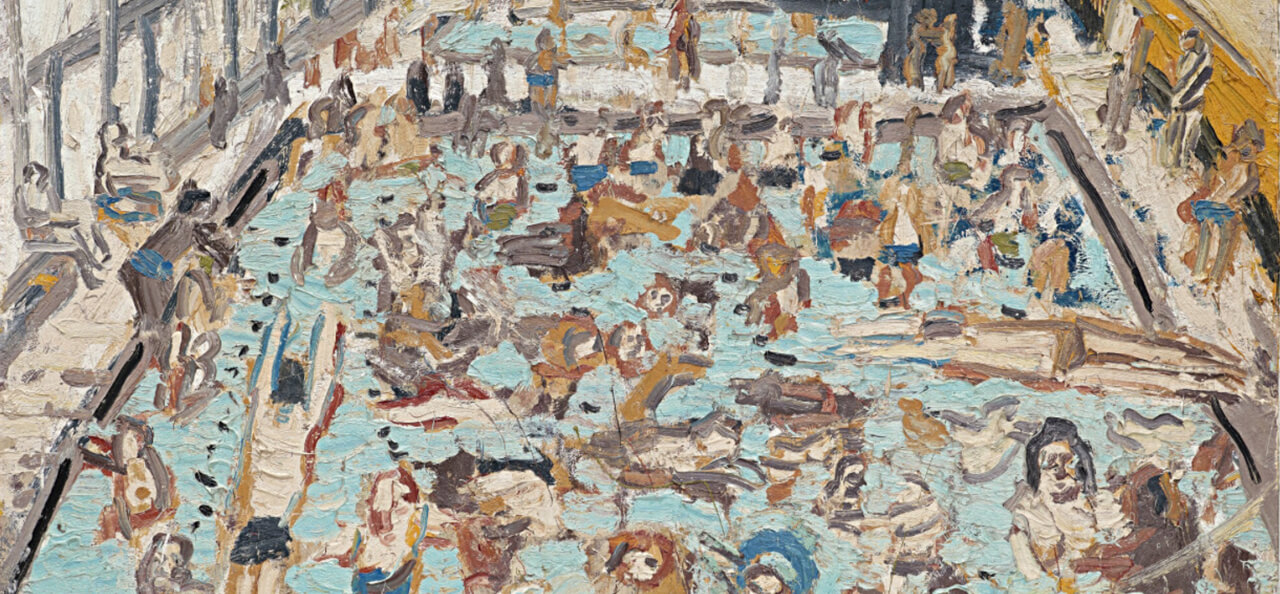
Banner image: Leon Kossoff | Children’s Swimming Pool, 11 o’clock Saturday Morning, August (1969) | Sold for £5.2 million | Sotheby’s London | Modern & Contemporary Evening Auction Masterpieces from the Lewis Collection
IN THIS ISSUE: WELCOME | MARKET OVERVIEW | SALES HIGHLIGHTS | London sales highlights | A TALE OF TWO DRAWINGS | THE GREAT TASTE TRANSFER | KEY FIDUCIARY ISSUES

Welcome to the second edition of The Fiduciary Eye, a seasonal newsletter from Withers Art and Advisory giving you a unique perspective on the global fine-art market.
In writing The Fiduciary Eye, Mari-Claudia Jiménez and Frank Lord call upon their insider perspectives within the art world and decades-long experience in law and business to surface critical commercial and legal issues of interest to collectors and their fiduciaries.
In this issue, we review auction highlights from the first quarter of 2026, explore the forces at play in the Old Masters, London and Memorabilia markets, and consider the pluses and minuses of selling a major collection in one’s lifetime.
The market recovery broadens
In the November issue of The Fiduciary Eye we took a deep dive into the New York marquee auctions, which augured a dramatic recovery in the fine-art market. Some $2.1 billion changed hands at the city’s three leading auction houses, powered by a cluster of extraordinary estates, most notably Leonard A. Lauder’s $526 million collection with its record-shattering Gustav Klimt portrait that went for $236 million. Heading into 2026, the big question was whether the market would continue to show strength or revert to the softening we saw in 2023 and 2024. The answer came early in on in an unlikely place: February’s auctions of Old Masters in New York.

Rembrandt Harmensz. van Rijn | Young Lion Resting, late 1630s-mid 1640s
Sold for $17.9 million
Sotheby’s New York
Master Works on Paper from Five Centuries
Often a quiet affair, the sales this season featured a star-studded line-up that included exceptionally rare drawings by Michelangelo and Rembrandt and a spectacular painting by Canaletto. The Michelangelo, sold at Christie’s, provided the greatest drama of the season: a rediscovered study for the foot for a figure in the Sistine Chapel frescoes, it was so rare and unusual that the auction house specialists did not quite know how to price it. Estimated at $1.5-2 million, the tiny work (measuring just 5 ¼ x 4 5/8 inches) went for an astounding $27.2 million. Sotheby’s drawing of a lion by Rembrandt was sold by the famed Leiden Collection to benefit Panthera, the world's leading wild cat conservation charity (hence the selection of the subject matter); it brought $17.9 million against its $15-20 million estimate after relatively quiet bidding. The top lot of the $179 million sale series was Canaletto’s richly detailed painting of a Venice festival, which sold for $30.5 million, once again proving the 18th-century master’s blue-chip status.
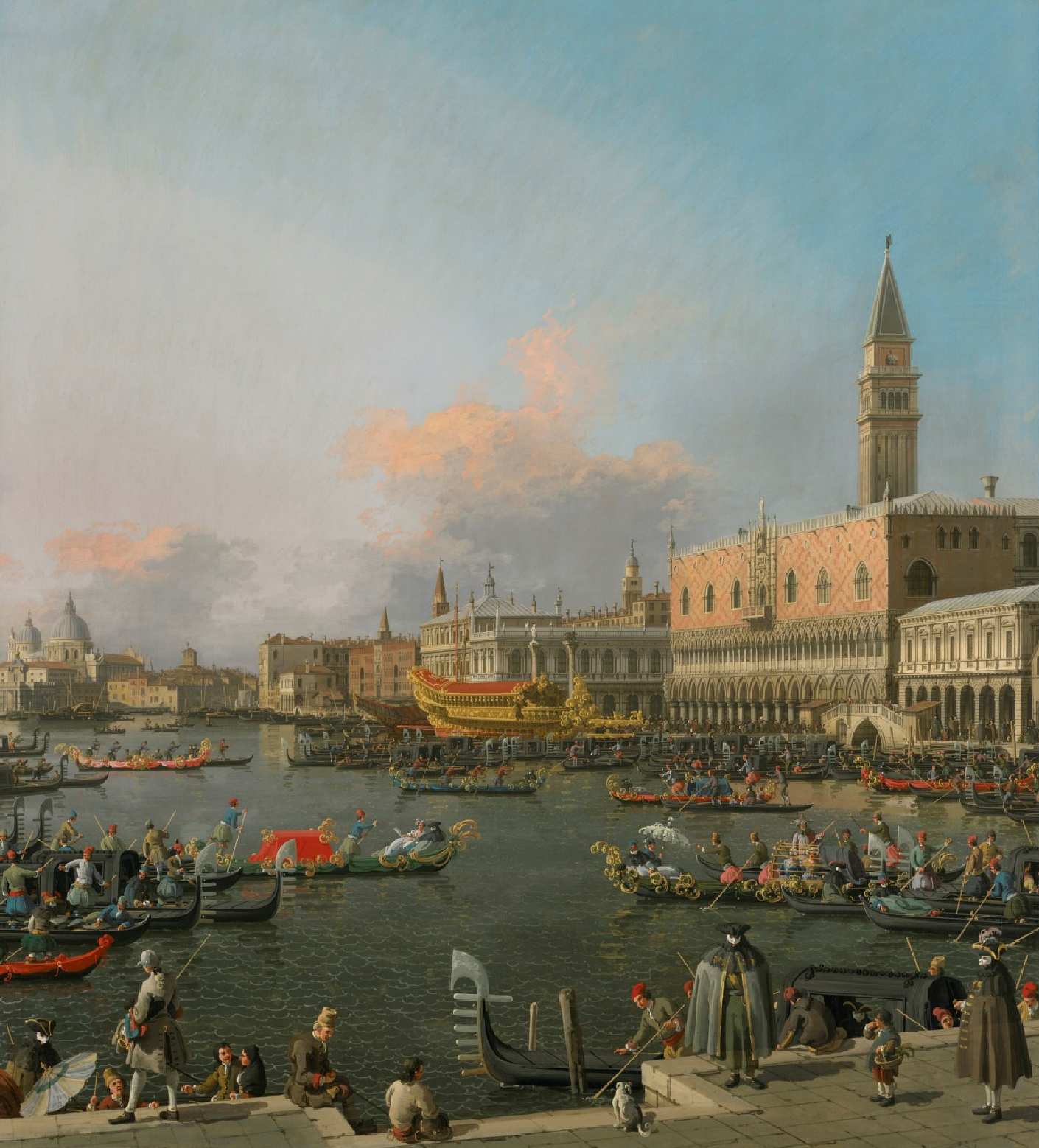
Giovanni Antonio Canal, called Il Canaletto | Venice, the Bucintoro at the Molo on Ascension Day, ca. 1754
Sold for $30.5 million
Christie’s New York
Old Masters
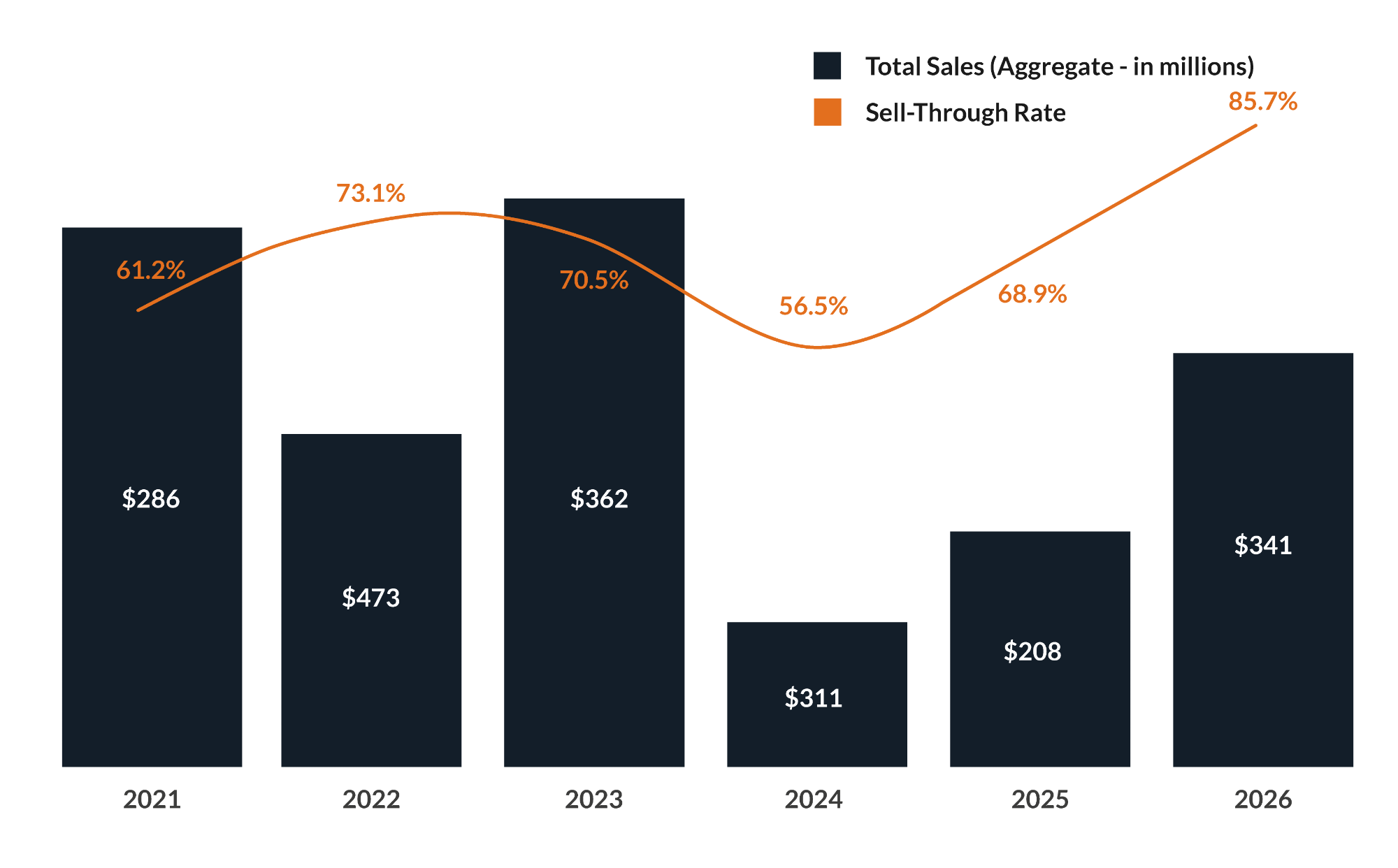
Apart from these headline numbers, the most telling data point for the Old Masters sales was the 86% sell-through rate – some 15% higher than the average over the previous five years (see chart below). This points to a significant rise in interest across the category for artists who are far less famous than the three headliners. We have long championed Old Masters as an undervalued category, particularly in comparison with Contemporary art, whose market was overheated for many years and is now lagging in the overall recovery. For significantly less than $5 million, you can still find an important painting by an Old Master with centuries of history, while in the Contemporary market it isn’t unusual to pay much more for something with an unclear market trajectory that was painted in the past decade or two.
Older collectors are still the dominant force in the Old Master market, but as the eminent (and generally elderly) dealers and other experts who dominated the field retire, a new generation of specialists is taking the stage. Both major auction houses are hoping to appeal to younger buyers by taking a fresh look at the genre and positioning their Millennial-generation specialists front and center. Christie’s Jonquil O’Reilly, for example, brings a novel approach by examining the intersection between Old Masters and fashion. At Sotheby’s, David Pollack has become the lead auctioneer for the Old Masters category in New York while Calvine Harvey, Head of International Strategy for Old Master Paintings appears in many promotional videos that bring a fresh perspective to the category. While there isn’t much available data on how many younger buyers are entering the Old Masters market, a walk-through of the auction previews indicated that a younger client demographic is definitely paying attention.
Old Masters New York sales results | February 2026


Henry Moore | King and Queen (detail), 1952-53
Sold for £26.3 million
Christie’s London
20th / 21st Century: London Evening Sale
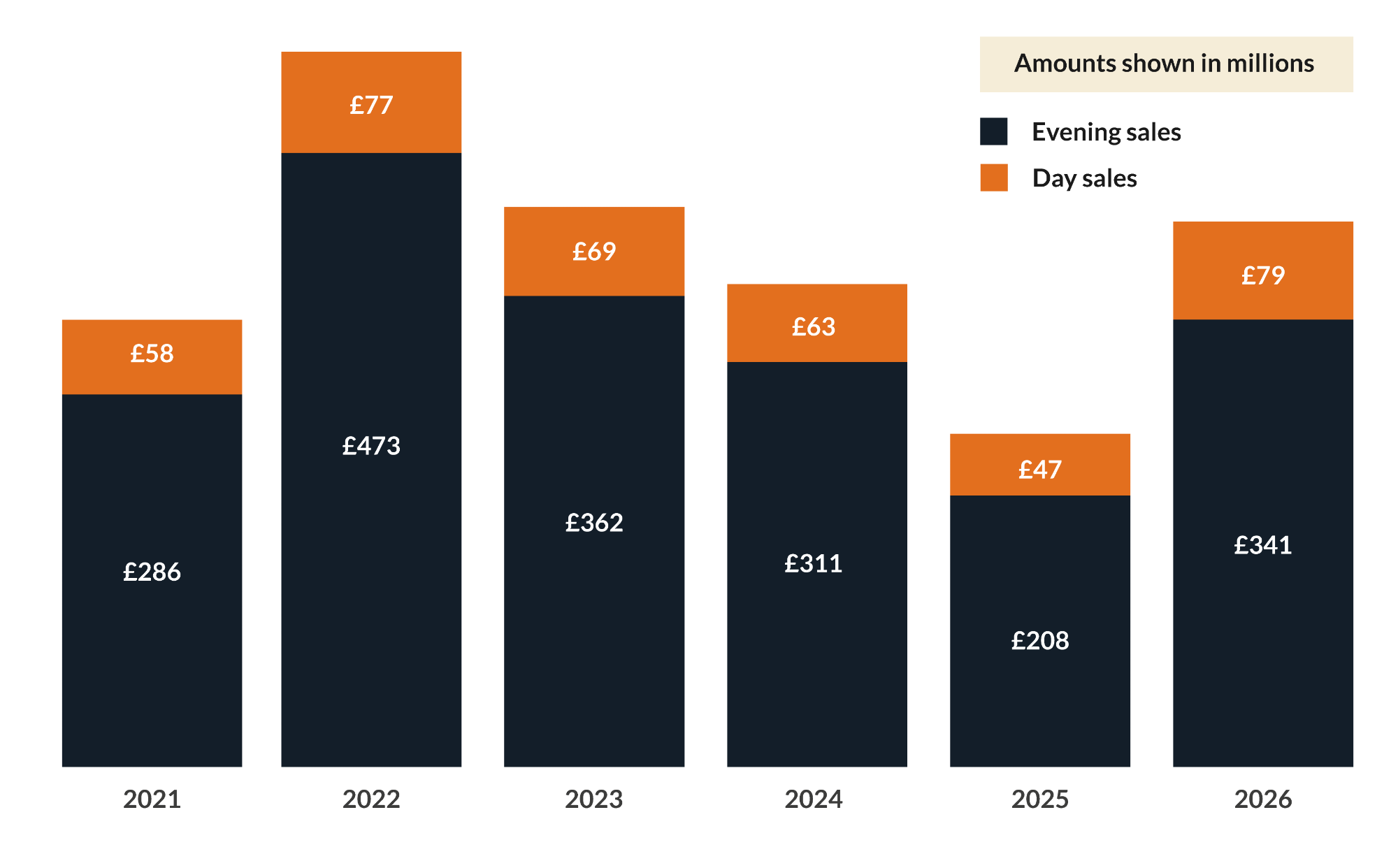
By March, when London hosted the year’s first round of Modern and Contemporary auctions, the question changed from whether the market recovery would continue to what impact the sudden conflict in the Middle East would have on art sales. As it turned out, not much — at least for the time being. Amidst the backdrop of war, rising oil prices, and jittery markets, auction rooms at Sotheby's and Christie's were packed and bidding was anything but cautious. The London art market, which has been choppy since Brexit, seemed to spring to life. The March auctions at Christie’s, Sotheby’s, and Phillips totaled £420 million ($562 million), the best results since 2022. Having attended many London auctions, the mood in the room was decidedly hopeful and energetic this year.
While New York is the undisputed center of the international marketplace, post-Brexit London has yielded its European art market dominance and now competes with Paris, where the art market has grown exponentially. This season’s London Marquee auctions were dominated by the greatest names in 20th-century British art: Henry Moore, Francis Bacon, and Lucian Freud.
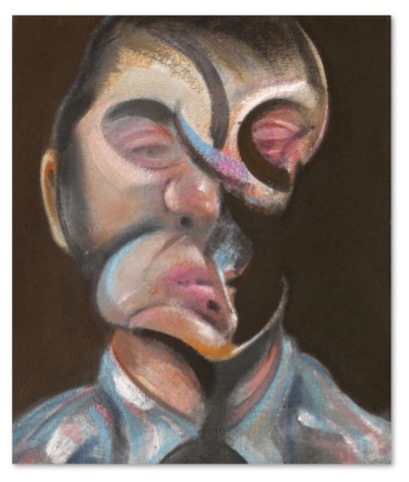
Francis Bacon | Self-Portrait (detail), 1972
Sold for £16 million
Sotheby’s London
Modern & Contemporary Evening Auction
Masterpieces from the Lewis Collection
Top lots soared past their estimates, led by Moore’s King and Queen (1952-52), which sold at Christie’s for £26.3 million ($35.1 million) against a £10-15 million estimate, and Francis Bacon’s 1972 Self-Portrait, which brought £16 million ($21.4 million) at Sotheby’s, doubling its low estimate.
Perhaps the biggest surprise of the week though came when Leon Kossoff's Swimming Pool from 1969, estimated by Sotheby’s at a modest £600-800,000, set off a protracted bidding battle and sold for £5.2 million ($6.9 million); Kossoff is less known outside the U.K. than Freud or Bacon, and competition for this painting demonstrated the importance of selling regionally coveted artwork where the demand is greatest.
At Christie’s, the Art of the Surreal sale achieved white glove status, meaning it was 100% sold. Dorothea Tanning’s Children’s Games (1942), a jewel box of a work with an extraordinary provenance and history behind it, brought £4.7 million ($6.3 million) against a £1-2 million estimate, demonstrating the strong and still-growing appetite for Surrealist works by female artists.
Modern and Contemporary London sales results


Joan Mitchell | La Grand Vallée VII (detail), 1983
Sold for HK$137.4 million
Sotheby’s Hong Kong
Modern & Contemporary Evening Sale
Hong Kong was the next stop on the international auction calendar: Christie’s and Sotheby’s held marquee sales of Modern and Contemporary the last week of March, and both houses posted their strongest results in four years, closing Q1 on a high note. The Hong Kong sales have evolved over the past decade to showcase a mix of blue-chip artists from Asia – especially perennial favorites Yayoi Kusama, Sanyu and Zao Wou-Ki – as well as the West. The top lot of the series, Joan Mitchell’s La Grande Vallée VII (1983), sold at Sotheby’s for HK$137.4 million (US$17.6 million), setting a new record in Asia for a work by a woman artist.
Christie’s top lot proved the global appeal of Gerhard Richter; the German artist’s Abstraktes Bild (1991), which likely was sent to Hong Kong because its deep red palette would appeal to Chinese tastes, went for HK$92.1 million (US$11.8 million). The sky-high sell-through rates – 92% at Christie’s and 97% at Sotheby’s – showed that supply is lagging far behind demand, and that should lead sellers back to the auction market in the months ahead.
The takeaway? The art market can be counter intuitive. While collectors typically avoid thinking of art as an investment, it is undeniably an alternative store of value. Even in these uncertain times, fresh, quality artworks commanded confidence — and competition. The London and Hong Kong sales showed that even though financial markets wobbled, the appetite for masterpieces remains resilient.
A tale of two drawings
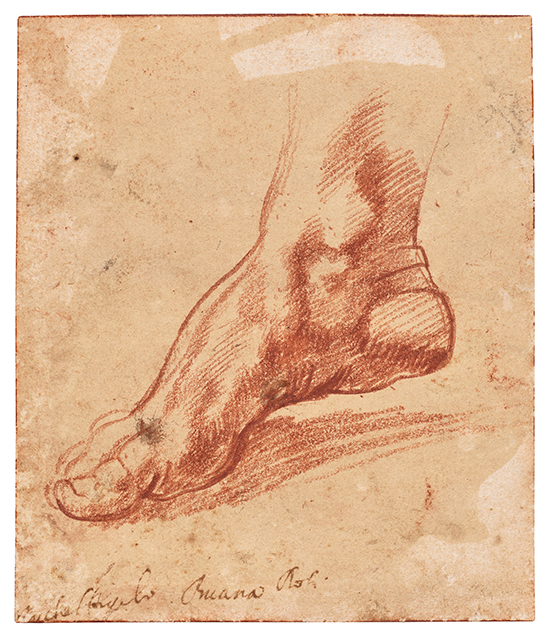
Michelangelo Buonarroti | Study for a foot of the Libyan Sibyl (detail), ca. 1511-12
Sold for $27.2 million
Christie’s New York
Old Master and British Drawings
This season Christie's made a headline-grabbing $27.2 million for Michelangelo's sketch of a foot. Michelangelo drawings rarely come to market, and the foot is a sketch for the Sistine Chapel ceiling. But its value is ultimately tied to the near-mythic status its maker has long held. Interestingly, a physical fragment from the early construction of his artistic reputation was simultaneously on offer uptown.
Among the drawings offered in the Collection of Diane A. Nixon, Sotheby's sold a sketch by Giorgio Vasari, who was an artist and author and a contemporary of Michelangelo. There is much to say about it, but here we're interested in its back, or verso, where there are lists of years and corresponding artists' names. These are Vasari's notes — perhaps the only ones remaining — for the book that made him famous: the Lives of the Most Eminent Painters, Sculptors and Architects, more commonly called The Lives of the Artist.
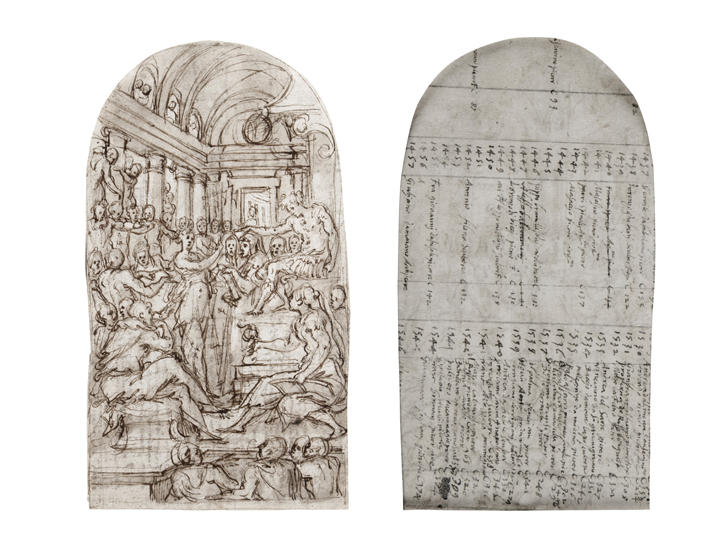
Giorgio Vasari | Dispute of Saint Catherine with Emperor Maxentius (recto and verso), ca. 1547-48
Sold for $108,000
Sotheby’s New York
Master Drawings from the Collection of Diane A. Nixon
Published first in 1550, while Michelangelo still lived, it is a compendium of artists' biographies wound around a story of the rebirth and growth of classicism. In Vasari's telling, the individual artists contributed to the gradual perfection of the visual arts. That perfection was reached, in his view, in Italy during his own life — in the work of Michelangelo.
It is difficult to fully grasp how influential Vasari's book has been. The use of the French word "renaissance" (literally, "rebirth") to describe that entire era of Italian art comes directly from his narrative. The roots of the modern discipline of Art History are firmly planted in his text. And the story that it tells culminates with Michelangelo.
That is how history leads us to a sketch of a foot selling for eight figures. And that makes the Vasari drawing feel like a steal at $108,000.
The great taste transfer
Much has been written about the Great Wealth Transfer as members of the Silent Generation (born 1924-1945) and Baby Boomers (born 1946-1964) – the greatest accumulators of wealth in history – pass. Much of that wealth is caught up in art, and in our practice we see just how central collections are to estate planning conversations. Mari-Claudia was recently interviewed by the Art Newspaper about how inheritance and estate tax regimes in the U.S. are influencing what happens to major collections — and why so many end up coming to market. Oftentimes, estates need to sell to settle taxes and to make for a more equitable distribution of funds. Even families with extraordinary collections can find themselves asset-rich but cash-poor so heirs may not have the liquidity to keep a collection intact, even when the collector’s intentions were to steward the art collection into the next generation.

Source: Cerulli Associates, “The Cerulli Report: U.S. High-Net-Worth and Ultra-High-Net-Worth Markets 2024.”
Planning for the next generation requires as much attention to what the next generation wants as it does to tax efficiency. One thing we see is that the next generation often does not have the desire or the lifestyle to live with the art their parents collected. Many next-gen collectors are more socially engaged, focusing on diverse and underrepresented artists and objects that speak to their generation.
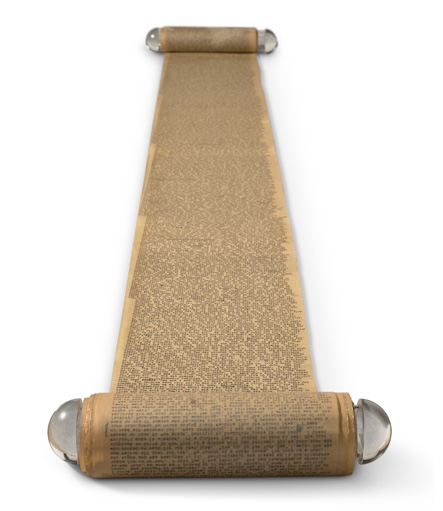
Jack Kerouac's original typescript scroll for the first draft of On the Road
Sold for $12.1 million
Christie’s New York
The Jim Irsay Collection: Hall of Fame
This has led to a surge of interest in previously undervalued artists, artworks and categories. Younger collectors are also more comfortable talking about art as an asset class and want to consider how art will retain or increase its value over time. In our practice, we counsel collectors to have open and thoughtful conversations with the next generation; early coordination between legal, tax, and market professionals can make an enormous difference in preserving both value and family harmony.
Beyond estate planning, the big question in the secondary art market is whether younger buyers will be willing to pay enormous sums to acquire the blue chip art that was especially prized a generation earlier – will there ultimately be a “great taste transfer” or will tomorrow’s collectors prefer to buy works of their own time? Many new buyers have a much broader definition of “art” than their predecessors and are interested in buying experiential objects that have cultural significance for them. Christie’s and Sotheby’s have always sold watches and jewels alongside art, but within the past decade have proven that their client base can be persuaded to pay millions of dollars for handbags, sports memorabilia, and even dinosaurs.

David Gilmour's Fender Stratocaster known as “The Black Strat”, 1970
Sold for $14.6 million
Christie’s New York
The Jim Irsay Collection: Hall of Fame
This trend was validated last month when the memorabilia market reached a new high-water mark at Christie’s sale of the Jim Irsay Collection. In addition to being the owner of the Indianapolis Colts, Irsay was a well-known collector of literary, music and movie memorabilia.
The collection — studded with icons of pop culture from David Gilmour’s “Black Strat” (which sold for a record setting $14.6 million), and Jerry Garcia's legendary guitar "Tiger" (which sold for $11.6 million) to Jack Kerouac's "On the Road" scroll (which sold for over $12 million) and the "Golden Ticket" from the film Willy Wonka and the Chocolate Factory (which sold for over $200,000) —was divided into four separate sales, with a fifth sale slated for July. The collection has already brought $94.5 million – almost four times its low estimate.
Key fiduciary issues (or, what keeps us up at night)

From the Collection of Jean & Terry de Gunzburg | Photo courtesy: Sotheby’s
The Collection of Jean and Terry de Gunzburg, coming to Sotheby’s in April and May and billed as “the most valuable single-owner design sale in Sotheby’s history,” will likely set new records for designers like Claude and François-Xavier Lalanne, Jean Royère, and Diego Giacometti, who consistently command prices equal to their fine-art peers. The sale strategy has been to position the de Gunzburgs as quintessential tastemakers, proving the power of provenance, even when the collectors are very much alive. It’s a rare example of a major collection coming to market during the collectors' lifetimes and provides an entry point to some interesting issues from both an advisory and a legal perspective.
Art collections are often such a central part of their owners’ identities that they don’t consider selling while they are alive. Further, there are typically significant tax benefits to waiting until after death to sell, which is why most major collections come to market from an estate. The primary reason for this is that artworks sold during a collector's life could incur a "double tax" — the sale of the artwork will be subject to capital-gains tax and then the funds from the sale could also be subject to estate tax upon the collector's death, or gift tax if the funds are transferred during the collector's life. (The current maximum capital-gains tax rate in the U.S. at the federal level is 28%, plus a 3.8% healthcare surtax, and federal estate and gift tax is imposed at a rate of 40% -- together, these two tax regimes could take an enormous bite out of the wealth that is actually generated by the sale.) In contrast, when artworks are sold after a collector's death, only federal estate tax and any applicable state estate tax applies, and due to the step up in basis that occurs at death, no capital gains taxes are imposed.
So why might a collector choose to sell their collection during life? Every situation is different but there are several tax and planning issues we discuss with clients who are contemplating selling their art (whether a single very valuable piece or an entire collection), including these:
- The basis of the artworks to be sold can factor into determining when it is most advantageous to sell. Simply stated, basis is the measurement by which the IRS determines how much tax is due to be paid on an asset when it is sold or otherwise disposed of. Determining basis is easy when an artwork was purchased from a dealer or at auction by the collector but may be harder if it was inherited or gifted. Because capital gains tax is levied on only the difference between the collector's basis and the sale price, if the artwork has a high basis, the capital gains consequences of a sale during the collector's life will be less severe.
- If the collector is selling the artwork to fund charitable activities, the collector can do this by either selling the artwork and donating the after-tax proceeds to the charity (which maximizes the collector's income tax deduction) or by donating the artwork to a charitable organization or even their own foundation, to be sold later (which optimizes the dollars passing to the charity). In 2018, Morton Mandel, a 97-year-old self-made billionaire from Cleveland, Ohio did just this when he sold his extraordinary collection of contemporary art at Sotheby's. Years earlier, he had gifted the collection to his Foundation, which then consigned and sold the artworks to benefit its charitable mission. By structuring his collection in this manner he was able to orchestrate and participate in the sale of his collection in a way that allowed him to tell his own story. And who better to tell the story of the collection than the collector himself!
There are many non-tax related reasons to consider selling a collection during one’s lifetime that may take priority over minimizing tax burdens. First and foremost, the successful sale of a collection often hinges on the narrative about the collector that is woven around the collection and the objects themselves. In the example of Morton Mandel, many collectors would like to see how the market validates their taste. Selling during their lifetime allows them that opportunity and as we have seen, there are ways that can be done that are tax efficient and philanthropic.
Unfortunately, a reality that many collectors face is that their children and grandchildren are unwilling or unable to become stewards of their collections. Therefore, collectors may be doing their children a favor by not leaving them their art. Heirs, for a variety of reasons, often don’t want to live with the paintings or sculptures their parents collected (see “the great taste transfer” above) and, if selling, they often are not as connected to the art market or as knowledgeable as their parents were and may find it difficult and stressful to navigate the complexities of the market, especially when they are grieving and potentially under a tight timeline to liquidate artwork. Estate taxes are due nine months after the date of death, with an automatic six month extension — depending on when the death falls in the auction calendar, this may leave the family with very little time to make decisions. Disagreements about selling a collection can sometimes divide families. Often, the easiest way to prevent this is to proactively address the issues that could lead to a dispute. Once collections are converted to cash, estate planning becomes far simpler.
These issues are among the many considerations that we discuss with collectors as they are weighing whether to sell in their lifetime or to include art in their estates.
What we are looking forward to
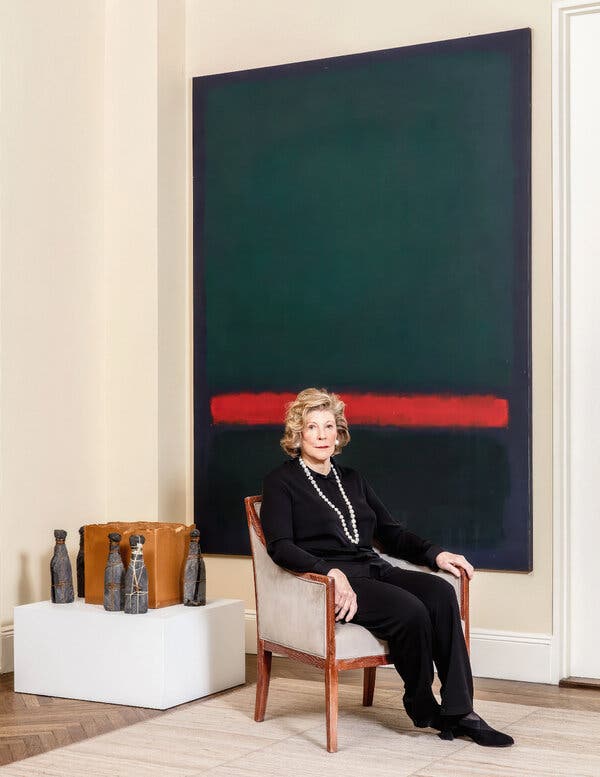
Agnes Gund pictured sitting in front of "No. 15 (Two Greens and Red Stripe)" by Mark Rothko | Photo: Stefan Ruiz for Vogue © Condé Nast. Artwork: © 2026 Kate Rothko Prizel & Christopher Rothko / Artists Rights Society (ARS), New York; © Christo 2000. | Photo courtesy: Christie's
Agnes Gund, who died last year at age 87, was a revered philanthropist in the New York art world and one of its most esteemed collectors. Very little of her astounding collection is coming to auction following her passing because she donated or promised so much of it during her lifetime (MoMA was her greatest beneficiary) and famously sold some highly valuable art to benefit social justice causes. But there will almost certainly be stiff competition for three masterpieces from her estate that will be offered at Christie’s this May, led by a late Mark Rothko acquired directly from the artist.
At Sotheby’s, the collection of leading dealer Robert Mnuchin also features a magnificent Rothko from 1957 (Gund’s Rothko was painted a decade later) and will be offered along with a much earlier example.
This battle of the Rothkos – fought on three fronts, since the de Gunzburg auction also includes an impressive 1969 example by the Abstract Expressionist – raises the question of whether the market can absorb four major works by the same highly sought-after artist, all with impeccable provenance. It raises a blockage issue, much as we discussed in our last issue of The Fiduciary Eye, but in this case may have been unavoidable. We’ll look forward to finding out just how deep the market is for Rothko, an artist revered by many collectors from the Silent Generation but whose appeal may or may not be as strong for younger buyers. It’s a perfect test of the great taste transfer.
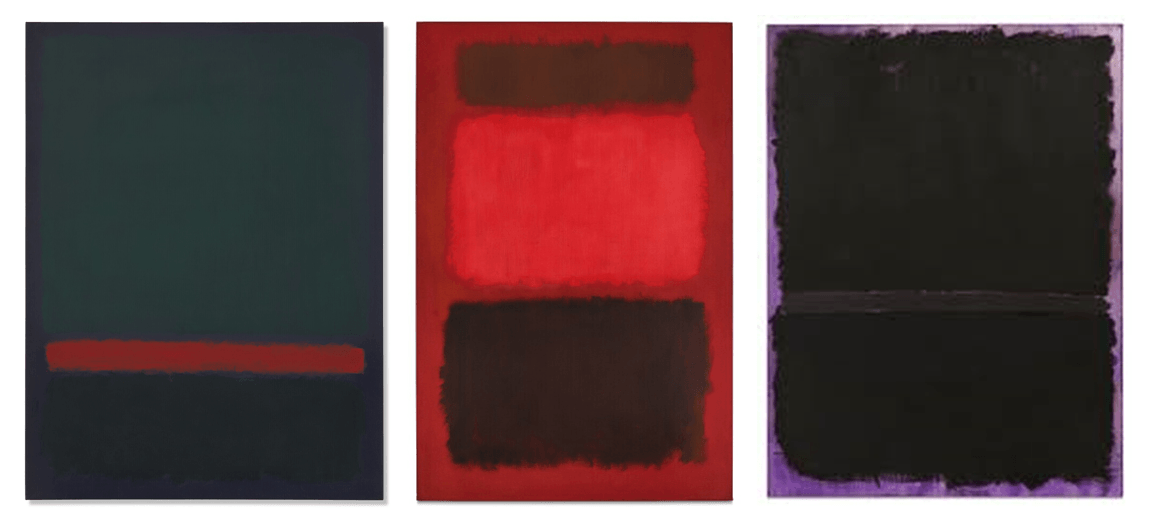
Battle of the Rothkos, from left to right: No. 15 (Two Greens and Red Stripe), from The Collection of Agnes Gund at Christie's, estimated in the region of $80 million; Brown and Blacks in Reds, from Robert Mnuchin: Collector at Heart at Sotheby’s, estimated at $70-100 million; and Untitled, from The Collection of Jean and Terry de Gunzburg at Sotheby’s, estimated at $10-15 million.
At 'Withers Art and Advisory' we’ll be unpacking the results from these wide-ranging sales from every possible angle and putting these insights to work as we counsel our clients. For clients preparing to sell or strategizing around legacy planning, this season underscored why rigorous due diligence, careful positioning, and timing matter. In an environment where not just quality but thoughtful strategy drive outcomes, the right advice can make all the difference.
How we can help
Authors

Mari-Claudia Jiménez
Partner | Co-head of art law | Withers Art and Advisory | New York
Mari-Claudia Jiménez
Partner | Co-head of art law | Withers Art and Advisory | New York
Withers Art and Advisory
View Profile
Frank K. Lord IV
Senior Counsel | Withers Art and Advisory | New York
Subscribe to The Fiduciary Eye
Our seasonal newsletter will be published on our website twice per year. Subscribe to ensure you receive a copy direct to your inbox.